






























































































As the UK faces crunch time for critical decisions about steel import quotas, we look at how Tata Steel UK makes its views known to policymakers on behalf of steelmakers and their customers.
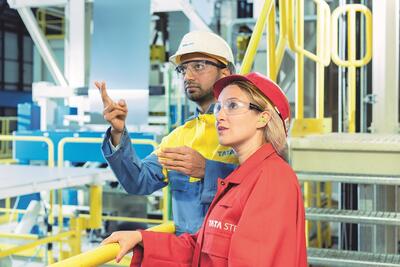
Tata Steel’s Public Affairs and Commercial team liaises with government on trade issues, making the case not just for the company but for the UK steel industry. Tom Evans, Head of Public Affairs and Community, and Vladyslav Durahan, Head of International Trade, talk us through the biggest issue on their agenda currently, in an insight into how we communicate with policy and decision-makers.
What’s the biggest policy issue for you currently?
Tom Evans: Undoubtedly, it’s measures to protect the UK steel industry from global overcapacity and unfair trading practices. Current steel trade safeguards are due to expire on 30 June and can’t be renewed. We need clarity on what will happen next.
Vladyslav Darahan: The global steel market is facing acute overcapacity. The US has already responded with tariffs to protect its domestic industry. The EU has announced it will take action in time for the expiry of its steel safeguards this summer. The UK, however, has yet to announce any response. The government must signal its intent by April to allow measures to be implemented in time. That leaves a matter of weeks to act to prevent further damage to the UK steel industry.
What are you asking of the government?
TE: Current import quotas offer little meaningful protection to domestic producers. We need a more responsive system better aligned with market conditions.
VD: We are calling for the implementation of a new, long-term quota framework that properly reflects UK market realities and supports the full utilisation of domestic steelmaking capacity. The current system was designed as a temporary safeguard and is no longer fit for purpose. Quota volumes need to be recalibrated in line with UK demand and domestic production capability.
The system should move to a global quota with country caps, with scope for a substantial EU-specific quota as part of a reciprocal agreement. At the same time, the out-of-quota tariff must be calibrated at a level that ensures the UK is not more exposed to import pressure than comparable markets, particularly the EU. If the UK applies a weaker tariff framework, it risks becoming a more attractive destination for displaced volumes. In this context, the current 25 per cent rate is insufficient to address the threat posed by persistently low-priced imports that disrupt market stability and undermine domestic producers.
We also believe developing country exemptions should be reviewed, particularly where they apply to major global producers.
How are you getting your message across?
TE: We’ve been working with the government on trade measures and submitted evidence to a consultation last summer to say we were in favour of an evidence-based approach to quotas, balancing our needs with those of downstream steel-using businesses. We have one-to-one engagement with the Department for Business and Trade (DBT) and ministers, and make representations to MPs and other stakeholders.
What is Tata Steel’s role in lobbying?
TE: We engage with the government alongside UK Steel, our trade organisation, and other steel producers. Tata Steel is the main UK flat steel producer. We make different products, but we all want the same thing.
VD: Yes, we are all working in the interests of the wider UK manufacturing economy. Steel is a foundational industry. It underpins construction, infrastructure, automotive and defence, so when we argue for a fair and effective trade framework, we are doing so to protect the entire supply chain and long-term national industrial resilience.
How are negotiations going with the EU, which has announced it will halve the tariff-free steel quota while increasing tariff rates to 50%?
TE: A constructive and balanced agreement with the EU is clearly in our mutual interests. The EU remains our closest and most integrated trading partner, and the relationship is very different from the competitive pressures we face from lower priced imports from parts of Asia.
VD: What we have seen in the EU is that decisive action has helped stabilise market conditions and reinforce confidence across the steel value chain. In contrast, the UK market has remained more exposed to volatility. If we get the framework right, it will create a level playing field, support investment and safeguard the wider steel ecosystem with minimal disruption to normal trade flows.
How is US policy affecting the situation?
VD: US tariffs, starting in January 2025, were undoubtedly a catalyst for wider changes to international trade. Geopolitics has a profound effect on business and steel is always used as a negotiating mechanism between governments, because it’s an enabler for a nation’s resilience and security. Decisions made on trading now will impact the steel value chain for years to come.
How urgent is the situation?
TE: It’s very urgent now. We have been urging the government to make a decision by 1 April to give and the industry, including our customers adequate time to plan.
In future issues we will look at our calls to address high electricity prices and at the Carbon Border Adjustment Mechanism (CBAM).
Categories