































































































At this year's SMMT Automotive Summit held at Institution of Engineering and Technology (IET) in London, I had the opportunity to join industry leaders in a panel discussion focused on one of the most important topics facing UK manufacturing today: building a more resilient automotive supply chain. While the discussion covered a wide range of issues, one message stood out above all others: The UK automotive sector will only thrive if the wider industrial ecosystem thrives alongside it – and vice versa.
The automotive industry does not operate in isolation. Vehicle manufacturers, suppliers, material producers, logistics providers and policymakers are all part of a highly interconnected system. The strength of that system determines the competitiveness of UK manufacturing as a whole.
Resilience has taken on a new meaning
For many years, supply chain resilience was largely viewed through the lens of cost, efficiency and inventory management.
Today, the picture is very different.
Businesses are navigating geopolitical uncertainty, shifting trade relationships, climate-related disruption, energy market volatility and the accelerating transition to net zero. Recent events have demonstrated how quickly supply chains can be disrupted by forces beyond any single organisation's control.
As a result, resilience is no longer simply about responding to disruption. It is about anticipating risks, understanding dependencies and building stronger foundations for long-term growth.
For UK manufacturers, this means taking a hard look at where vulnerabilities exist and identifying opportunities to strengthen domestic capability where it delivers strategic value.
Decarbonisation and competitiveness must go hand in hand
One of the most encouraging themes emerging across the manufacturing sector is the growing recognition that decarbonisation is not just an environmental imperative. It is also a significant competitiveness opportunity.
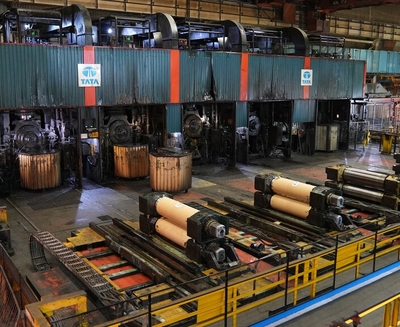
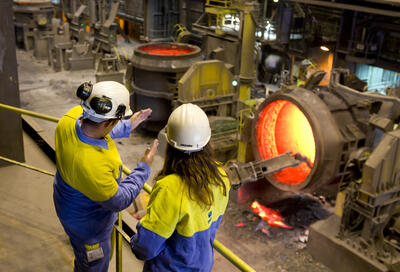
At Tata Steel UK, our transition to electric arc furnace (EAF) steelmaking represents one of the most important industrial transformations in our history.
By recycling UK-sourced scrap steel into new steel products, we have the opportunity to build a more circular and sustainable steel industry while supporting customers with lower-carbon materials.
This transition is about more than reducing emissions. It is about creating the foundations for a modern industrial supply chain that is fit for the future. A supply chain that is more resource-efficient, less dependent on imported raw materials and better positioned to support the UK's manufacturing ambitions.
For the automotive industry in particular, access to lower-carbon materials will become increasingly important as manufacturers work to meet customer expectations, regulatory requirements and their own sustainability commitments.
Navigating an increasingly protectionist world
At the same time, manufacturers are operating within an increasingly complex global trading environment.
Around the world, we are seeing governments introduce industrial strategies, localisation incentives and trade measures designed to support domestic production. While these policies aim to strengthen national competitiveness, they are also reshaping global supply chains and investment decisions.The challenge for the UK is to ensure that we remain an attractive place to invest, innovate and manufacture.
This is especially important given the close relationship between the UK and European automotive sectors. Our industries are deeply interconnected through shared supply chains, manufacturing networks and customer markets.
Maintaining strong trading relationships and ensuring that UK industry has a voice in discussions that influence competitiveness will be critical if we are to secure long-term growth.

The case for smart localisation
A recurring theme throughout the panel discussion was the importance of de-risking supply chains through localisation where it makes strategic and economic sense.
This is not about turning away from global trade. Global supply chains will continue to play a vital role in manufacturing.
However, recent years have shown the value of having stronger domestic capabilities in critical areas.
Whether through investing in local production, increasing material circularity, developing skills or strengthening relationships with UK-based suppliers, smart localisation can help reduce exposure to future disruptions while creating economic value closer to home.
It can also help accelerate the transition to a lower-carbon economy by shortening supply chains and supporting more sustainable production models.
The role of Government
Industry cannot achieve this transformation alone.
Long-term investment decisions require confidence and certainty. Businesses need a policy framework that supports growth, innovation and competitiveness over decades, not just electoral cycles.
Competitive energy costs, supportive investment conditions, infrastructure development and continued engagement with our key trading partners will all play an important role in shaping the future of UK manufacturing.
The opportunity is significant, but realising it will require collaboration between government, OEMs, suppliers, material producers and industry bodies.
A shared opportunity
What encouraged me most at the Summit was the degree of alignment across manufacturers in the sector.
While businesses may approach challenges from different perspectives, there was a clear consensus that resilience, competitiveness and sustainability are increasingly intertwined.
The challenges facing UK industry are substantial. Yet so too are the opportunities. If we can strengthen our industrial ecosystem, accelerate decarbonisation, invest in domestic capability and create the conditions for long-term growth, we can build a manufacturing base that is not only more resilient, but more competitive and sustainable.
And building that future is a responsibility we all share.