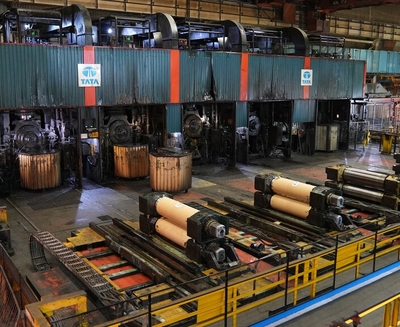
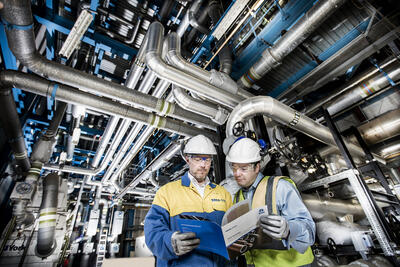
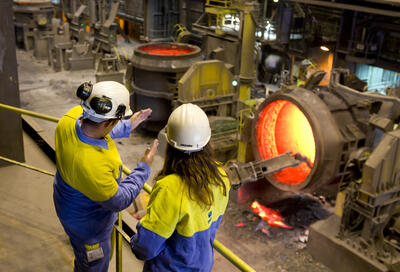
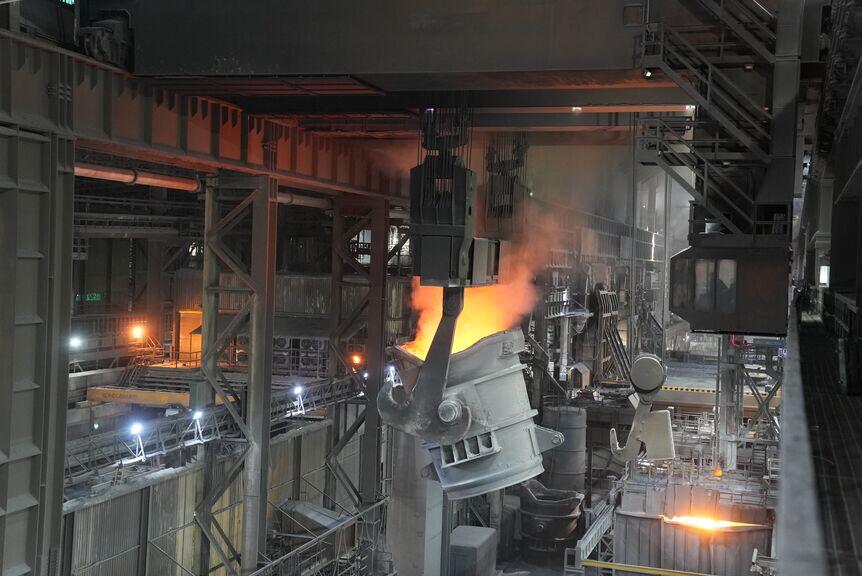
Chris Scourfield, Project Engineer for the enabling works, explained: “This area was once the busiest part of the steel and slab plant - up to 5 million tonnes a year of molten iron from the two Blast Furnaces was de-sulphurised, and converted to liquid steel in two giant convertors.”
“The transformation work started as soon as steelmaking stopped back in 2024. At the North end of the plant we removed the fume hoods from the hot metal stations, the rail tracks, the industrial weighing scales and the two desulphurisation stations, all without incident.”
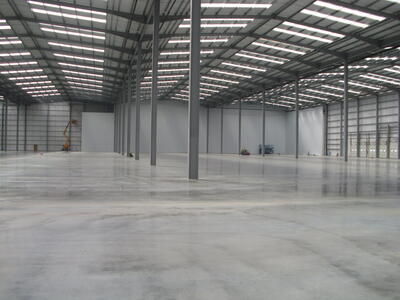
The cleared space will become a critical working area for the refractory replacement and repair of the EAF shells and steel teeming ladles.
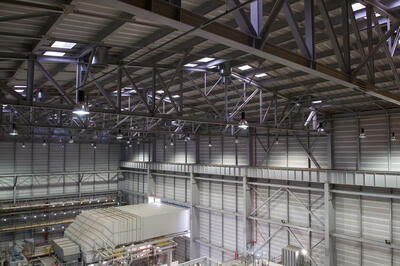
Looking upwards reveals another major operation in progress: preparation for the removal of the 500-tonne South Charger (girder) Crane. “We’ll be cutting a hole in the roof to allow a huge crawler crane outside to lift it out,” Chris explains.
At the south end of the steelplant, the transformation is even more striking. Former scrap bays, workshops and the secondary steelmaking ‘teeming bay’ have been completely stripped out and walls knocked through to make way for the EAF itself and two brand new ladle metallurgy furnaces.
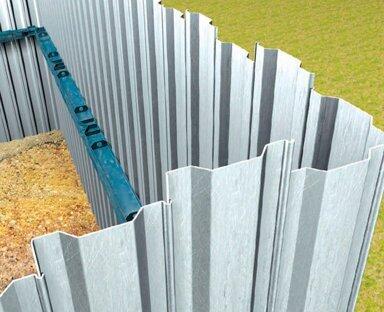
Extensive piling and ground works will create a strong and level foundation across the entire bay at the same level as the area outside that will support the Consteel® conveyor.
Chris reflects on the significance of the moment. “Some of the stuff we’re taking out, I was instrumental in installing 35 years ago. It is tough, but when you know it’s making way for a brand-new steelmaking process that secures the site's future for generations to come, it makes it all worthwhile.”
With new structures and equipment expected to start arriving later this year, the steelplant is well on the way to the biggest transformation since it was first commissioned in 1972.
WATCH HERE Tim Rutter speaks to Project Engineer, Chris Scourfield
Picture: Looking towards the converter stage from the North end of the steelplant during previous operations
About Tata Steel UK
- The Tata Steel Group has been named one of the most ethical companies in the world, and is among the top producing global steel companies with an annual crude steel capacity of 34 million tonnes.
Tata Steel in the UK has the ambition to produce net-zero steel by 2045 at the latest, and to have reduced 30% of its CO2 emissions by 2030. - In October 2024, Tata Steel ceased ironmaking at its Port Talbot site and temporarily paused steelmaking pending the construction of a 3.2Mtpa Electric Arc Furnace, due to be commissioned late in 2027 / early 2028. For that period, the business will import slab and hot rolled coil to support manufacturing and distribution operations at sites across Wales, England and Northern Ireland as well as Norway, Sweden, France, Germany and UAE. It also benefits from a network of sales offices around the world.
- Throughout 2024 Tata Steel UK has been undergoing a restructuring that will reduce the size of its workforce to around 5000 direct employees, supplying high-quality steel products to demanding markets, including construction and infrastructure, automotive, packaging and engineering.
- Tata Steel Group is one of the world's most geographically-diversified steel producers, with operations and a commercial presence across the world.
- The group recorded a consolidated turnover of around US$26 billion in the financial year ending March 31, 2025.