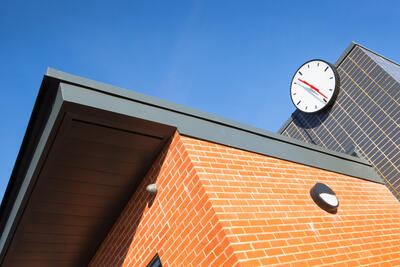
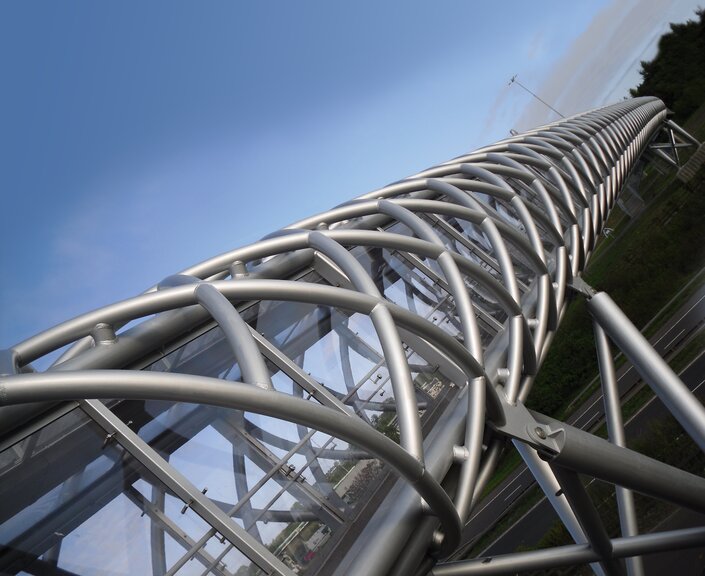
Examples of Celsius® durability can be seen world-wide, e.g. Harthill footbridge shows no sign of corrosion 15 years later
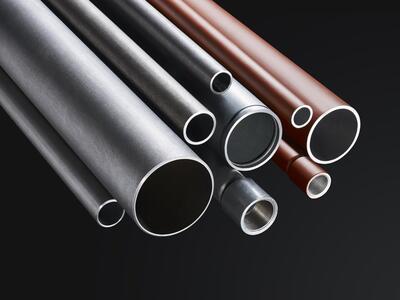
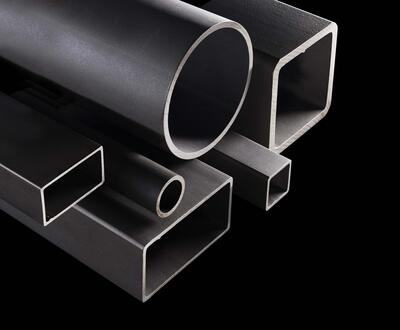
The short answer, backed by decades of rigorous research and global evidence, is a resounding no. Internal corrosion is simply not a concern when hollow sections are properly sealed due to the science and demonstrated by real-world investigation.
The Science Says: No Oxygen, No Problem
Corrosion is an electrochemical process—it requires a trio of elements to occur: iron, oxygen, and water. In a properly sealed hollow section, the internal environment is starved of two critical elements: oxygen and water.
Here's how it works:
● Limited Oxygen: Any small amount of oxygen initially trapped inside is quickly consumed in superficial oxidation. Once it's gone, the reaction ceases because no fresh air can enter
● No Condensation: Moisture doesn’t form inside sealed hollow sections due to temperature fluctuations
Theoretical studies and calculations consistently confirm that any initial steel thickness loss under these conditions is negligible—it doesn’t compromise structural integrity. The internal environment remains stable and dry, eliminating the conditions necessary for progressive corrosion.
Decades of Global Evidence Speak Volumes
If theoretical science isn't enough, real-world performance certainly is. Extensive investigations across America, Europe, and Asia have examined hollow sections in service for decades—some up to sixty years! These structures have weathered urban pollution, harsh marine atmospheres, and even highly corrosive industrial sites.
The findings are remarkably consistent: properly sealed hollow sections remain virtually intact internally. In many cases, the original mill scale—the layer formed during manufacturing - was still present after half a century of exposure!
Consider these compelling examples:
● Pittsburgh Trolley Poles: After 40-50 years, even with their upper ends open, their interiors showed negligible corrosion
● Dayton, Ohio Lighting Columns: Remained internally intact after 59 years of service
● Chelsea FC Floodlight Towers: Sealed at both ends, these towers had bright, clean interiors after 21 years
● S.S. Aquitania Lifeboat Davits: Exposed to a harsh marine environment for nearly four decades, they showed no internal corrosion
● German Transmission Tower Braces: Inspected after 18 years, these welded-sealed braces were in perfect condition
● Global Consistency: Similar results have been observed in Japan, Italy, and France, proving that proper sealing triumphs over climate or environment
Even in extreme scenarios, like trusses installed above industrial pickling baths where external surfaces were severely damaged by corrosive fumes, the interiors of sealed hollow sections remained pristine.
Practical Guidelines: Seal It and Forget It
The message for designers and fabricators is clear and simple:
The most effective way to prevent internal corrosion is to hermetically seal both ends of the hollow section during fabrication. This prevents moisture or oxygen ingress eliminating the possibility of corrosion.
Furthermore, designers should avoid adding vents unless essential. Open vents are a path for water ingress, ironically accelerating corrosion rather than preventing it. While special cases like galvanized structures or concrete-filled columns require specific considerations, even here, internal corrosion remains negligible when best practices are followed.
The Bottom Line: Busting a Long-Standing Myth
Internal corrosion in sealed hollow sections isn't a genuine engineering concern; it's a persistent myth that has lingered for far too long. As one expert aptly put it:
"Internal corrosion should be regarded as more of a bogey than a serious engineering problem."
By adhering to basic fabrication rules, engineers can confidently specify hollow sections, ensuring long-lasting durability, significant reductions in maintenance costs, and the elimination of redundant internal protection measures. Hermetically sealed hollow sections are a reliable, economical, and enduring solution for the demands of modern steel construction.
In summary, key takeaway for designers and specifiers: Hermetically sealed hollow sections do not corrode internally—regardless of environment or service life.
If you require any further details or would like a CPD on this subject, please contact Kieran either by email kieran.butroid@tatasteeleurope.com or telephone 07920 835317.